Solid-state amplifiers from 1 W to 1.5 kW per unit, aggregating to multi-kilowatt.
GhostLink slots into an existing transmit chain without redesigning the host system. Because the output envelope rides the input, the band-pass filters come out, the digital pre-distortion comes out, and the error correction comes out. What is left is an amplifier that reproduces any waveform or protocol across more than five octaves, and a transmit chain that is no longer locked to the band it shipped with.
 8 kW CW aggregated · 4U
Platform-agnostic by design
Scalable solid-state modules that aggregate to multi-kilowatt output and fit the transmit chain you already have.
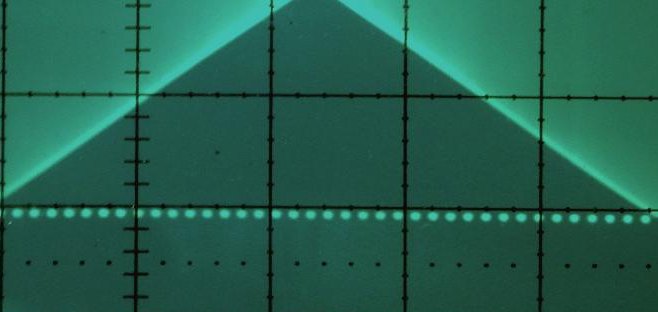
Near-perfect envelope tracking
A negligible difference between input and output. No band-pass filters, no pre-distortion, no error correction in the path.
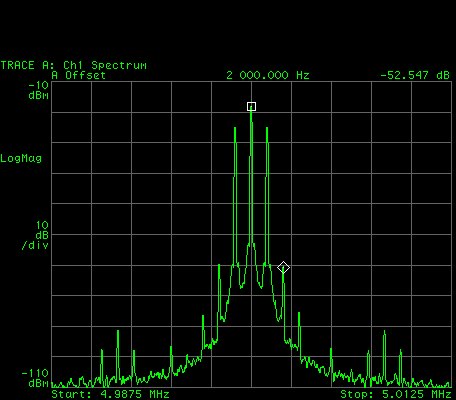
−110 dB at 0.1 Hz
The signal cleanliness high-resolution radar returns and high-fidelity communications actually depend on.
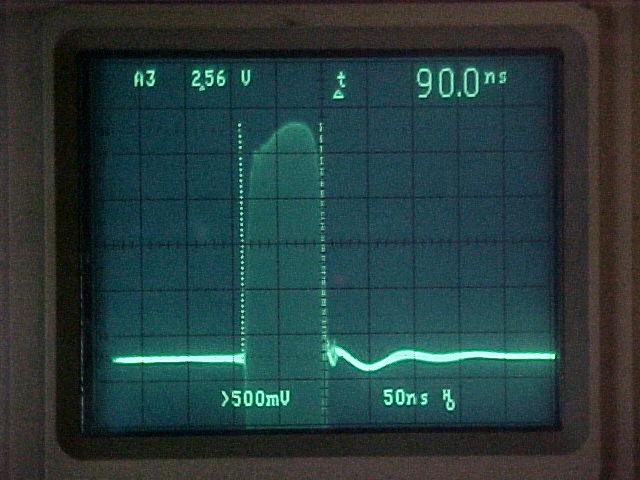
Nanosecond RF bursts
Sharp rise and fall times enabling high-resolution pulse compression, fast time-of-arrival, and new pulse-shaping techniques.
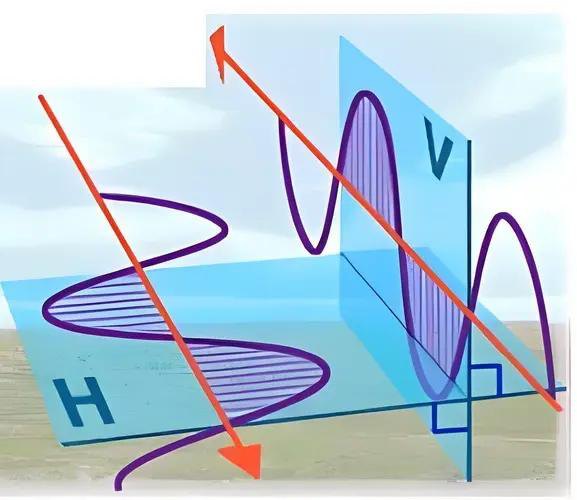
Nanosecond H/V switching
3D waveforms, polarization-encoded data channels, and polarimetric radar modes that legacy amplifiers cannot generate.
Full-spectrum, multi-octave
Any waveform or protocol in a single unit, with simultaneous multi-band operation and real-time switching.
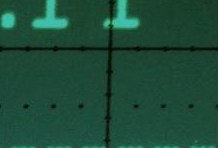
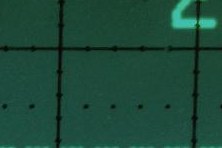
The claims, on instruments.
Linearity, pulse edges and polarization switching are the three things people ask us to prove first. These are the measurements we show them.
Roughly 750 W/mK. Copper is about 400.
CryoShield is a non-toxic nanoparticle paste and powder. Put it directly on components, on housings, or use it as an additive in an immersion loop. It does not ask for a system redesign, which is the point: the thermal headroom shows up in hardware you have already built and already qualified.
What you spend that headroom on is your call: shrink the component, raise the output, ruggedize the part, or pack more of them into the same volume.
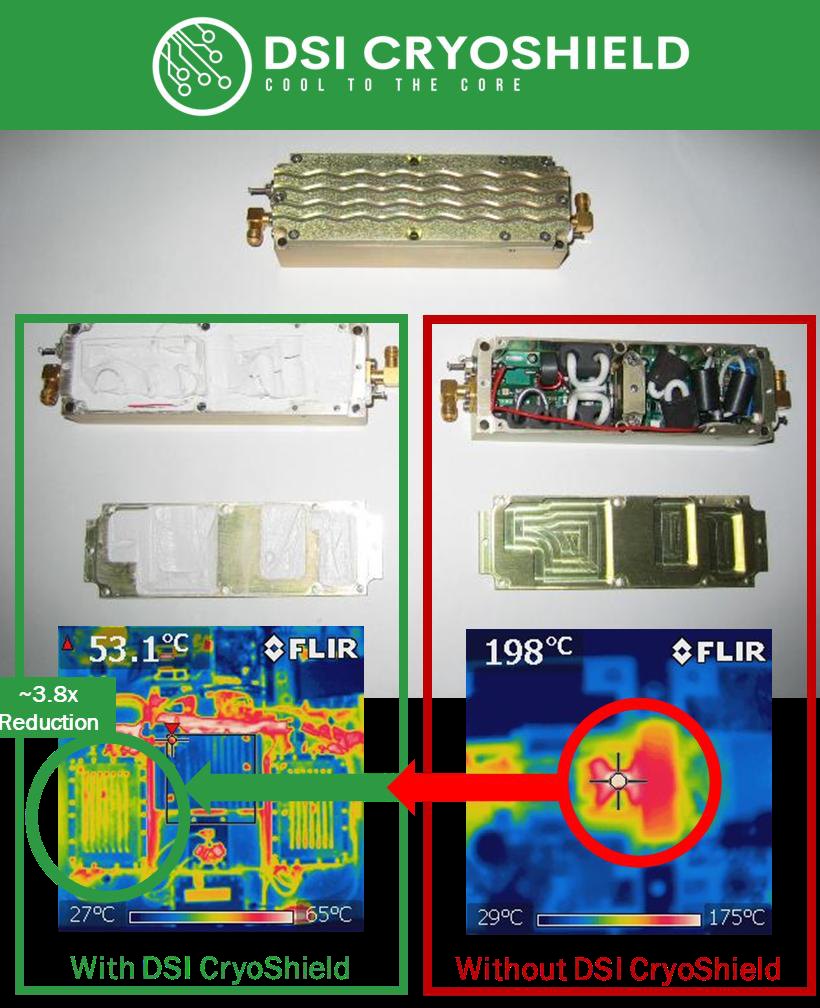 FLIR · 53.1 °C with · 198 °C without
GPU overclocking figures are from synthetic testing. Dissipation in immersive cooling environments compounds beyond the air-cooled figure.
1.5× to 2.5× the power in 20–50% less rack.
The best-in-class competitor models used by SOCOM, BAE and Lockheed put 2 kW in an 8U chassis, 1 kW in 5U, and 500 W in 3U. The THEIA family covers all three of those points in 4U, and beats them on output at every one.
| Model | Frequency | Power | Size |
|---|---|---|---|
| THEIA-BVA | 30 – 520 MHz | 1 kW | 4U |
| THEIA-H | 1.5 – 30 MHz | 2 kW | 4U |
| THEIA-EV | 140 – 180 MHz | 2.5 kW | 4U |
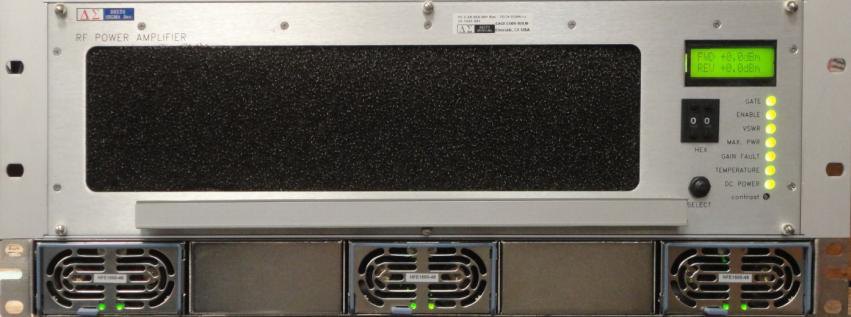 THEIA · 4U rack-mount
A kilowatt on the footprint of a phone, or eight of them in 4U.
The same amplification technology scales from a 2 W mini-format module to a 25 kW HF system. These are units in production.
Where our amplifier families live.
Every bar is a production or in-development family plotted against the frequency it covers and the power it makes. Both scales are logarithmic. Hover a bar for the part.
477 active components in three buckets.
Complete and modular amplifier products. The discrete RF building blocks inside them. And the combiners, filters and control units that orchestrate a full amplifier ecosystem. Items in production carry a COTS designation. Obsolete parts are not listed.
| Classification | Items | In development | What is in it | P/N families |
|---|---|---|---|---|
| Amplifier Sub-Systems | 135 | 2 | Assemblies, mainframes, plug-in modules, specialty systems | 2-60, 2-61, 2-62, 2-81 |
| Components | 282 | 0 | HF transformers, directional couplers, baluns, RF switches, PSU | 2-46, 2-27, 2-32, 2-17, 2-29 |
| Other Key Elements | 60 | 4 | Combiners and splitters, filter assemblies, logic and control | 2-47, 2-48, 2-65 |
JUPITER, QUASAR, PEGASUS, THEIA, CENTURION, HARRIER
Rack assemblies from 3U to 22U, pre-wired racks for rapid integration, and 64 plug-in modules from 1 W to 1.3 kW.
272 HF transformer assemblies alone
Impedance matching and signal coupling from 45 W to 3 kW, in 1:1, 4:1, 9:1 and 16:1 ratios, TMM dielectric and high-stability builds.
Combiners to 64-way, filters, logic
2-way through 64-way radial combiners to 16 kW p.e.p., bandpass and harmonic filters, RF switch matrices and control units.
Full catalog with part numbers, frequency, power and dimensions is available on request. Where a source record was missing a power figure, it is inferred from the model designator and should be verified before quotation.
The COTS designation is the starting point, not the ceiling.
Every catalog part is a commercial-off-the-shelf item in active production. We regularly take that same proven technology and tailor it mechanically, environmentally, and electrically to a platform, a program, or an operating environment. Most of what we ship has been adapted somehow.
Form factor
Chassis depth, rack-unit height, mounting patterns, connector locations, panel layouts and weight targets, to match an equipment bay you already have.
Hardening
MIL-STD-810 shock and vibration, MIL-STD-461 EMI/EMC, IP-rated enclosures, salt-fog and humidity, and temperature-range extension.
Cooling integration
CryoShield tuned to the host: air-cooled, liquid-cooled, immersion, or conductive cold-plate, with interfaces specified to your heat-rejection topology.
Connectors and I/O
RF, DC, control and data interfaces (38999, BNC, TNC, N, SMA, fiber, MIL-STD-1553, Ethernet variants) matched to your harnesses.
Conditioning
28 VDC, 115/230 VAC single or three-phase, 400 Hz and 800 Hz, inrush limiting, EMI filtering, and integrated conditioning to the platform.
Documentation and qualification
Test plans, FAT/SAT procedures, first-article inspection reports, MIL-STD qualification campaigns, and traceability for program acceptance.
What to send us
Target platform, environmental profile, performance requirements and program milestones. Engineering comes back with a recommended engagement level, a technical approach and a rough schedule. Pricing for adapted configurations keeps COTS efficiency wherever the requirement allows it.
Bring us the requirement, not the part number.
If it maps to something in the catalog we will tell you which one. If it needs an adaptation we will tell you what kind. If it needs a clean sheet we will tell you that too, and what it takes.
Contact Us →